On Truth-Telling and Organising
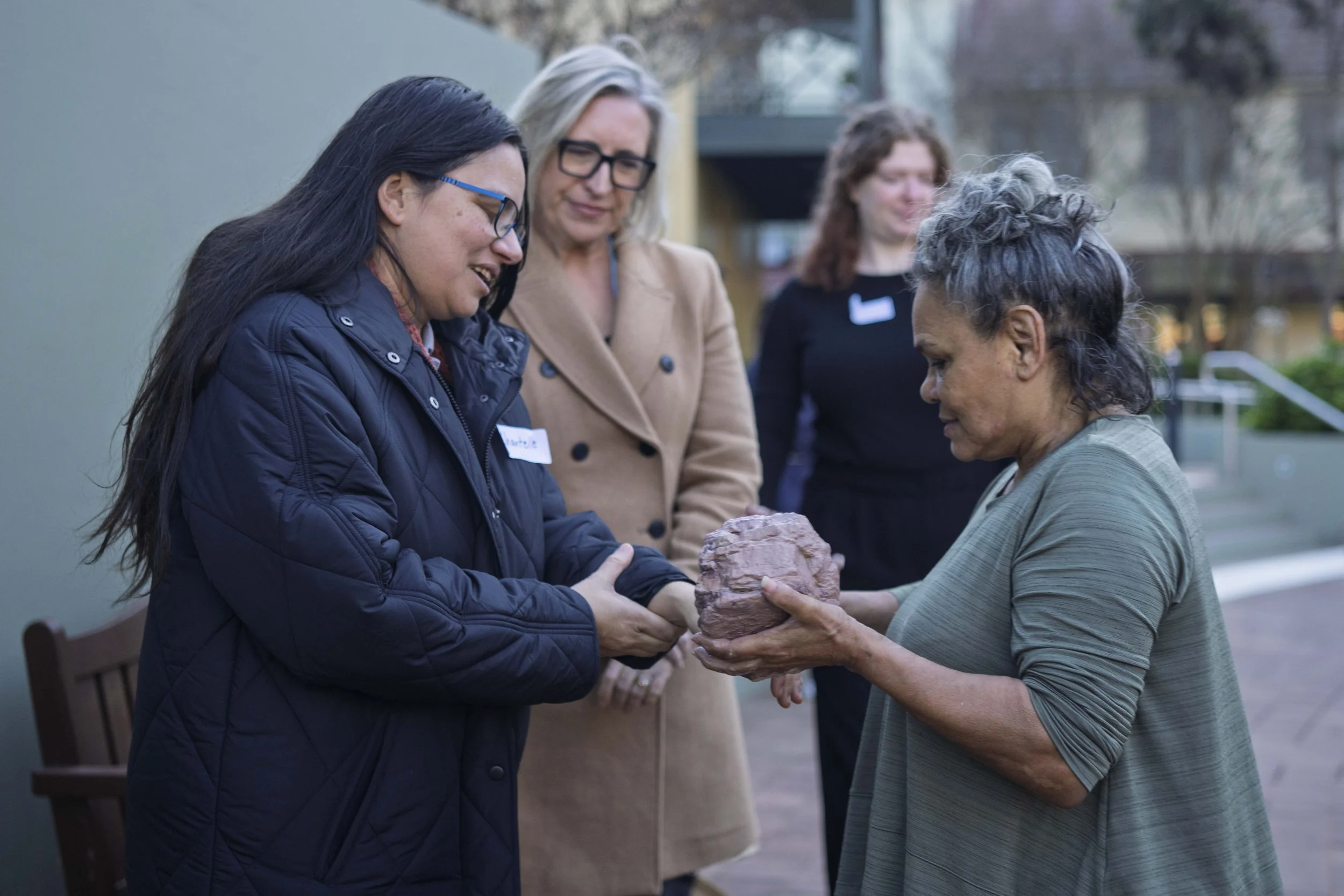
The Alliance team at last year’s truth-telling action with Gai-mariagal Festival
There are many aspects of community organising that have been deeply transformative for me. The chance to reflect on and understand my own story and motivations, building relationships across diversity that I never would have thought possible, and seeing communities win on solutions that change the lives of their families. But one of the aspects of this role which I personally find the most meaningful and important, is the opportunity to build relationships with, listen to, and learn from First Nations leaders in our organisations and communities. Each time I'm lucky to spend some time with a First Nations leader, it's such a joyous time! We laugh, share stories and delicious food!
This is something that I am, regrettably, relatively new to. I'm deeply imperfect, will always be learning, and I have no authority to be giving advice or represent any communities. All of the reflections I'll share here are lessons that have been taught to me by Aboriginal and Torres Strait Islander people. That's the good news- there is so much wisdom, humour and power in First Nations leaders and communities in our organisations and neighbourhoods! We just need to take the initiative to connect with it.
To the First Nations leaders who have shared your wisdom and spent time investing in my learning and our relationship- I'm so grateful and humble. To the non-Indigenous people reading these reflections, I share these because I believe that building trusting relationships with First Nations people brings meaning and joy to our lives, but we collectively need to get a lot better at it (myself included). I also believe that this is not only the right path, but the only path forward, for our Alliance.
Cassandra Gibbs from the Josephite Justice Network says that "relationships are 1, 2 and 3". It's one of the best lessons I've ever learned. And it's a very helpful reminder for me as a non-Indigenous person that relationality is not just the top priority, but it's the whole podium of our priorities! We can hold ourselves accountable to this in many ways, but in some cases, it could be a matter of looking at our diaries and checking how much time and how often are we sitting down with a First Nations person in our organisation or community and building a relationship (and no other goal).
To prioritise being relational can be counter-cultural for us non-indigenous people, but for many in our Alliance it is very natural and an important cultural practise. It is certainly counter-cultural for the market-driven Western culture which generally dominates most of our civil society organisations. But First Peoples have been doing this for tens of thousands of years- since time immemorial. Reverend Michael Duckett from the Macarthur Indigenous Church says "we are a relational people".
The community organising tradition teaches us to put 'people before program'. And for all of us building this Alliance on unceded Aboriginal land, remembering to centre this principle is crucial if we want to build relationships and learn from First Nations people. Sometimes we can get caught up in some parts of how we 'do business' in the Alliance like sticking to time and having clear commitments for tasks. Aunty Kathy Donnelly from Wesley Mission teaches us that these types of formalities should always take a lower priority to relationship building. I'm also so grateful to Aunty Kathy for her trust, her wisdom, her time and the shared long lunches we have at the local cafe!
The organising tradition teaches us that action can only move at the speed of trust. In the context of building trusting relationships with First Nations people, Nathan Tyson from the Uniting Church Synod of NSW ACT, reminds us that in the 'world as it is' there is a baseline, or status-quo, of scepticism by First Nations people and organisations of non-Indigenous actors. I'm grateful for this honesty. This is, of course, because of US as non-indigenous people. Trust can only be built with consistency, over time. This consistency is so important and something we might forget.
For us to put relationships 'first, second, and third' we need to make sure we invest time to consistently show up, talk honestly, listen with humility, and have fun! We need to learn to be honest about why we want to build a relationship together and be prepared to be vulnerable ourselves. Building trust together might take months, it might take years- and there should be no deadlines. The important thing I think we need to remember is that sometimes trust can take a long time to build because of the status-quo of mistrust that US as non-indigenous people are responsible for. So, when we hold ourselves accountable about how much time are we investing in these relationships, we also check- am I doing this as a one-off, or have I thought about the next time (or times) I'll be sitting down with this person?
A note on listening with humility. There are countless First Nations Elders, activists, authors, actors, politicians, artists etc who have been telling the truth for hundreds of years. What non-indigenous organisations and people haven't been doing well is listening. Lorena Allam says that she thinks "the hardest part [of truth telling] is truth listening: who are we talking to and are they prepared to really listen, because it will make you very uncomfortable and will probably change what you do." Something we as non-indigenous people can actively train ourselves to do is to learn to sit in tension and be uncomfortable. Being uncomfortable with the truth is healthy and normal- it shows that we're learning something new. When someone trusts us with an uncomfortable truth or uncomfortable lesson, we can remember that this honesty is a sign of respect!
I run a truth telling reading program with assistant organisers who are completing their Bachelors or Master of Social Work placement with us at the Alliance. They learn and from resources like articles, film and art, and from First Nations leaders in our Alliance like Aunty Kathy Donnelly who has been very generous with her time and wisdom to educate the next generation of social workers.
Through this program, we learn to sit in tension with the uncomfortable dynamics of social work as a colonising force. We learn to reflect on and name how the truth of colonisation continues to be deliberately obscured from them, and all of us. We leave committed to learn to be more informed, skilled and committed allies and social workers.
Here are some great films and series that we have watched and discussed in our Alliance team. They are all available free on the ABC. If your members want to learn more about First Nations voices and knowledges, you could host a screening and discussion! But we need to remember that if we are not investing our time to consistently build trusting relationships over time, then these resources have a risk of becoming just words on a page (or screen) and they aren't something living. Relationships are what makes truth telling come alive.
Recommended watching:
The Dark Emu Story
The Last Daughter
In My Blood it Runs
My Name is Gulpilil
The Australian Dream- Adam Goodes
Firestarter
The Story of Bangarra
‘Still We Rise- Celebrating 50 years of The Aboriginal Tent Embassy’
The Australian Wars (series)
Jess Harrison
Community Organiser